Longform formats
The Harold and its variations show how an evening can have a frame while its scenes remain unwritten.
An independent guide to longform improvisation
Improvised theatre, in plain words
An independent guide to longform improvisation
Longform improvisation is theatre made as it unfolds. Dialogue, characters and action emerge from the performers' responses to each other rather than a finished script. The audience sees decisions become a shared world: an imagined room, a relationship, a problem and the consequences of what someone does next.
The long form allows scenes to speak to other scenes. A character can return, a small detail can become a theme, or an opening idea can take on a different meaning later. In Wikipedia's account of improvisational theatre, short-form games usually have a defined structure, while longform can connect scenes through story, people or subject matter. That difference concerns how a performance is organised, rather than how quickly a performer thinks.
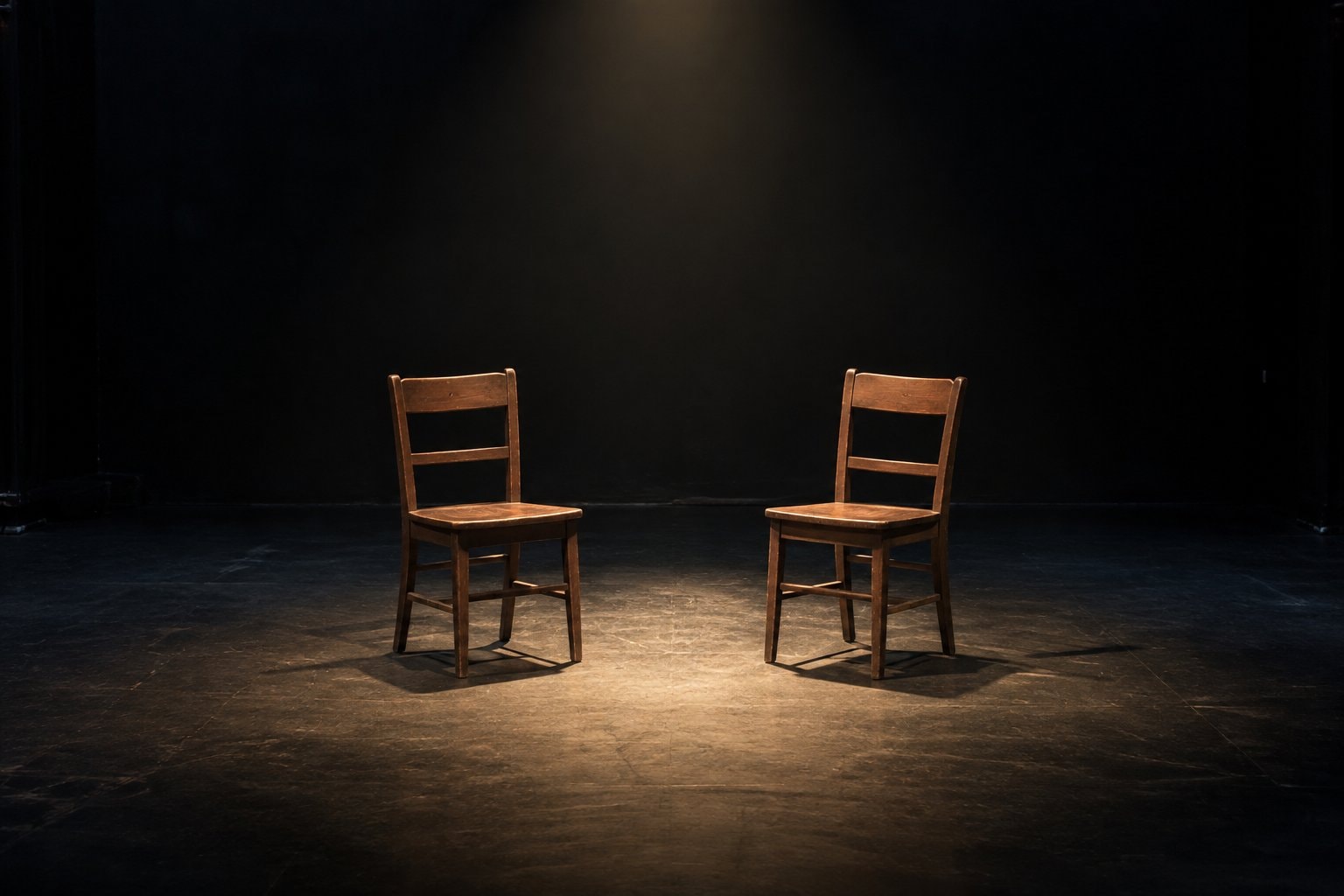
The Harold and its variations show how an evening can have a frame while its scenes remain unwritten.
A true story can supply details and themes that invented scenes carry in new directions.
Referees, judges and audience choices add another layer to the relationship between scene and room.
Mixed experience and temporary ensembles give open play a character distinct from a regular team's set.
Extended performance and ghost-story material bring pacing, atmosphere and fatigue into the discussion.
Agreement, listening and character choices turn separate contributions into a scene with a point of view.
An ensemble's shared habits develop through rehearsal, coaching and the changing relationships within the group.
Games and scene work sit within teaching models that separate a practice's vocabulary from its public performance.
The teaching accounts trace distinctive approaches to games, scenes and ensemble structures.
Plain definitions connect the names heard around a rehearsal room to the action those names describe.
Voice, breathing, laughter and movement make the physical work of unscripted performance visible.
Commedia, theatre games and Chicago ensembles offer different starting points for understanding improvised theatre.
Comparing their preparation and audience relationships reveals both their differences and their meeting places.
Edits, returning characters and delayed connections give an audience clues about the emerging performance.
A converted room brings light, seating and sightlines into close conversation with the performers.
Stages, museums, galleries and public arts agencies describe a regional setting for live performance.
A neutral account of drama games and theatre in education separates their history from claims about children.
Methods from improvised theatre also appear in communication training and other workplace contexts.
The guide's scope and source choices explain how its accounts of practice and research are framed.
A bare stage can become a crowded station or a quiet kitchen without either place being built. The audience follows the performers' attention. A gesture establishes an object; another performer takes that object as real. What matters is not whether the gesture is elaborate, but whether the imagined surroundings stay consistent enough to carry the scene. A door that remains in the same place gives the audience something dependable amid the invention.
The same process works with relationships. A reaction can reveal more than a speech. Someone who carefully avoids a visitor's gaze gives a scene a different feeling from someone who welcomes the visitor without hesitation. Those choices remain open to change as the scene develops. Improvisation involves noticing what a partner has made possible and deciding what contribution belongs alongside it.
Comedy is a frequent result, but a scene can also hold embarrassment, affection, silence or uncertainty. Laughter does not need to arrive after every line. A long scene can make room for a pattern to become clear before it turns. The interest lies partly in seeing how performers discover the shape of an idea together, including the moments when an apparent detour leads somewhere unexpected.
A format is a framework for that discovery. It may describe how a set begins, how scenes change or when the ensemble comes together. It does not settle what the characters will say. A Harold gives returning scenes and group passages a recognisable order; a monologue-inspired set starts from a spoken story; a competitive format adds rules about judging and points. Each changes what the audience is watching for.
There is room to distinguish structure from habit. A team can repeat a form while creating very different evenings. Equally, a familiar character habit can appear inside an unfamiliar form. The pages about formats explain the framework; the craft pages examine the choices within it. Neither regards an unscripted performance as an absence of preparation. Rehearsal, shared vocabulary and attention to partners remain part of the work.
The Long Scene is an independent reference for curious audiences, beginning improvisers, parents and teachers. A term encountered in a format article can be followed into the glossary. A question about teaching can lead toward the games tradition and the people whose work shaped it. The history pages set those ideas beside other forms of comedy, without making every practice part of a single straight line.
The audience pages take a different angle. They examine what is visible in a small room, how scene changes become legible and how a city's wider arts landscape gives performance a setting. The workplace page considers the use of improvisational methods away from a theatre. The body page discusses voice, breath and physical performance through clearly attributed reading and research. Across these subjects, an explanation describes a practice; it does not promise an outcome.
This guide runs no shows, classes, workshops, jams, marathons or tournaments. Its purpose is to make the subject easier to read: ordinary language for an art in which much of the meaning passes between people before anyone has time to explain it.